
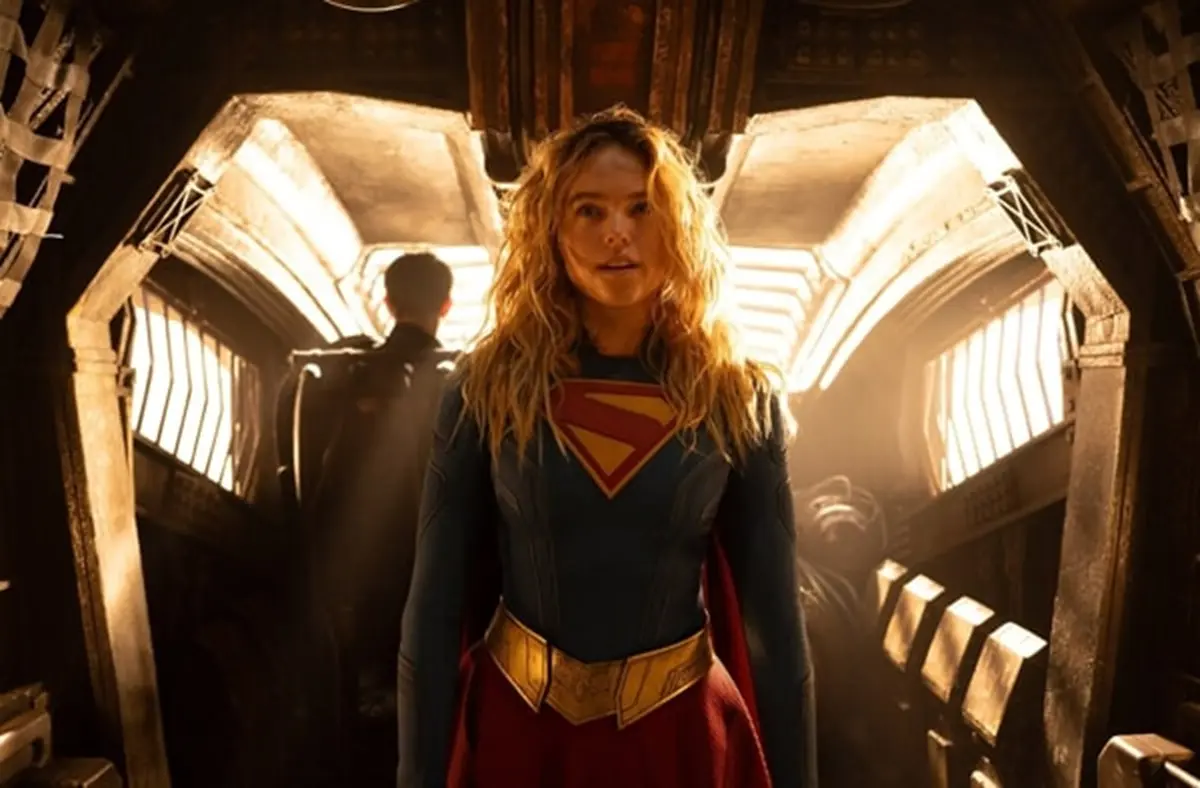
Craig Gillespie’s “Supergirl” hits theaters with less-than-optimistic box office projections. The second big-screen installment of the new series created by James Gunn turns out to be a mediocre, predictable, and boring film—but above all, it lacks imagination, verve, and a distinct identity. In short, this Phase One of the DC Universe doesn’t seem to be taking off.
“Supergirl” – The Plot
“Supergirl” begins by introducing us to Kara Zor-El (Milly Alcock), who is about to turn 23 and absolutely certain she wants to celebrate her birthday the way she always has: with poor hygiene, little sleep, plenty of alcohol, and Krypto, her faithful dog. She lives on a planet with a red sun, which means she lacks the same powers as her cousin Kal-El, aka Superman/Clark Kent (David Corenswet). The reason is simple: she hasn’t adapted to Earth and has no interest in becoming a superhero like him. Everything changes, however, when Ruthye Marye Knoll (Eve Ridley) crosses her path.

She is the daughter of a world-famous swordsmith, who was slaughtered along with the rest of his family by the cruel Krem of the Yellow Hills (Matthias Schoenaerts), leader of a gang of ruthless, bloodthirsty galactic pirates involved in mass violence and plunder. Kara and Ruthye will be forced to join forces to defeat Krem, setting aside their respective personalities and pride. The tough and unpredictable bounty hunter Lobo (Jason Momoa) will also be part of the team, but the two girls will be forced to confront their own pasts, their own pain, and their own fears.
“Supergirl” arrives after a rather complicated genesis, linked to the revolution that took place in the DC Extended Universe with the arrival of James Gunn and the clean slate he decided to implement for the franchise. After “Superman,” which marked the beginning of Gunn’s new direction, all eyes were on Craig Gillespie, a highly competent craftsman, who in “Supergirl” sought to remain faithful to the original character while also presenting a Kara Zor-El who could serve as a role model for young audiences (especially female viewers), with whom Warner Bros. needs to connect.
However, the end result is truly disappointing—a sort of living fossil that contains everything the world of comic book movies, as well as other genres, has already offered and shown us in the past. The problem lies not so much with the cast as with Ana Nogueira’s screenplay, which is so derivative that it actually feels like a sort of B-grade fan-made project, offering nothing but a series of homages to already well-known films and universes. Ultimately, “Supergirl” has little to offer even visually; it doesn’t even manage to be truly entertaining—it’s simply a film devoid of its own soul.
A comic-book movie that follows in the footsteps of others
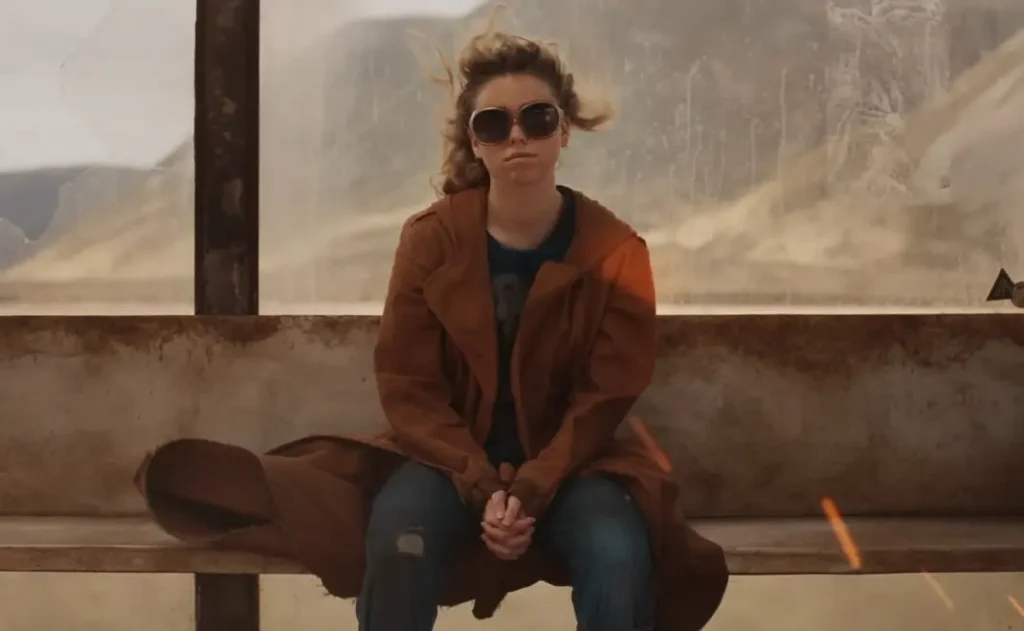
Milly Alcock does her best to lend credibility and charm to this Supergirl, who is perpetually high, drunk, or sad, and averse to responsibility and socializing. But rather than an anti-heroine, she comes across as a spoiled and unbearable teenager. “Supergirl” moves at a disjointed pace, with Gillespie trying in vain to inject some life into a predictable plot. There are countless homages to films like “Interceptor,” “Forbidden Planet,” and “Escape from New York,” but the only genuinely compelling part, in the end, is the central segment, where we meet Kara’s parents, Zor-El (David Krumholtz) and Alura (Emily Beecham), and witness the fall of Krypton.
It’s a shame, though, that it doesn’t last very long, and then everything goes back to being monotonous—every character a repetitive ham, every fight a bar brawl that tries too hard to mimic Jackie Chan movies or Westerns. The further the story goes, the more unbearable the protagonist and her sidekick become, and Momoa isn’t able to make up for it—partly because of the limited screen time. From start to finish, the whole thing feels like a carbon copy of Guardians of the Galaxy, but without the same imagination, dynamism, or even minimally acceptable world-building.
“Supergirl” makes the same mistake as Gunn’s “Superman”: it portrays superheroes as big kids—childish, gifted, incredibly boring, and lacking any real motivation. There’s no epic scope, no adventure—nothing but a repetition of a style that Gunn has shaped, but one that can’t work for every season. After the Super-Dumb, here comes the Super-Mess-Maker, one might say.
True to the comics? Yes, both of them—to a certain subgenre, to be precise. But that doesn’t necessarily mean it’s enough to make a good movie, at least not this way. We already know that “Supergirl” will be a total flop at the box office; the critics have been rightly harsh. Did we really sacrifice the Snyderverse for this crap? For dim-witted superheroes who burp, get kicked in the groin, or spout moralistic speeches—the very kind that the two “Deadpool” movies rightly made fun of? How is this stuff any better than what Waititi was crucified for? If Paramount buys Warner Bros., James Gunn’s universe will cease to exist—but given the numbers, it’s likely to end that way anyway. The truth? It won’t be a great loss.
DC Comics characters deserve a different kind of treatment.
